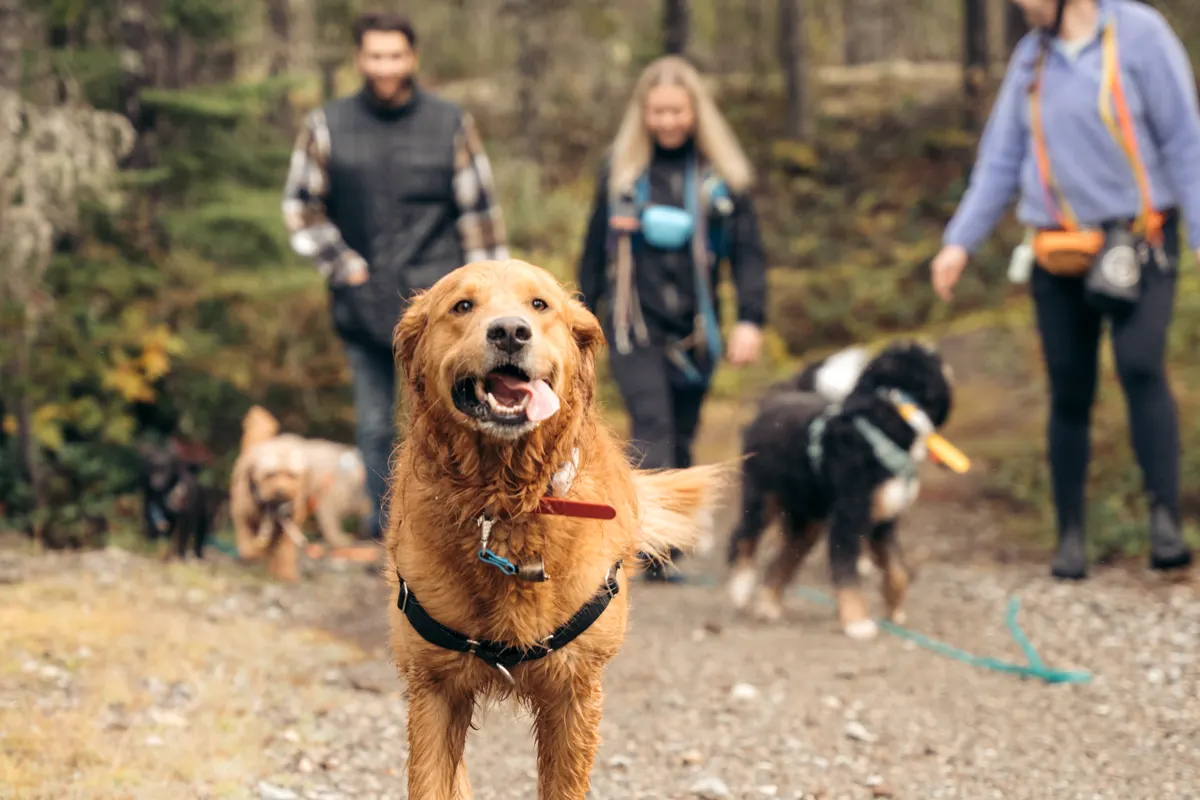
Is My Dog Ready for a Group Walk?
Most friendly dogs are ready for a small pack, and your dog does not need a perfect sit to join one. What matters is five everyday things, listed below. If two or more of them are shaky, a private walk or a few sessions with a trainer first is the kinder route, and it is a normal first step, not a setback.
We get this question from owners before almost every first booking, usually asked quietly: will my dog be okay? Here is how our walkers think about it.
Ready does not mean obedient
A group walk is not a training class. Our packs are capped at six dogs per walker, and we build them by energy level, play style and temperament, not by age or size. A dog who sits on cue but panics around other dogs is less ready than a goofy dog who has never heard of “heel” but loves company. We wrote about that difference in why socialization matters more than obedience.
The 5-point readiness check
None of these needs to be perfect. We are looking for a dog who is mostly there on most of them.
-
Recall
Does your dog come back when called, even with something interesting nearby? This matters most, because off-leash time on our hikes is earned: every new dog starts on leash or a long line and goes off-leash only after passing our trail-readiness check on recall and staying with the pack.
Not yet looks like: ignoring you completely around squirrels or other dogs.
Try this: practise in a quiet spot on a long line, and pay big for every return.
-
Loose leash
Can your dog walk past another dog without hauling toward it? A little pulling is fine. We care about the kind that comes with frustration or fixating.
Not yet looks like: lunging, barking or going stiff when another dog appears.
Try this: reward a calm look at another dog from a distance where your dog can still take a treat.
-
Greeting other dogs
Is your dog curious and relaxed, and able to turn away? Good greetings are short, curved, and easy to interrupt. Our guide to reading play shows what that looks like, and the 10 behaviours we watch for on every walk covers the rest.
Not yet looks like: staring, stiff posture, guarding a toy or stick, or not being able to disengage.
Try this: short, calm hellos with one known, easygoing dog before you try a group.
-
The car ride
Your dog rides to the trailhead with the pack, so they need to cope with the van. Mild excitement is normal. Panic or relentless barking is something to work on first.
Not yet looks like: drooling, shaking or non-stop vocalizing in the car.
Try this: short, happy trips that end somewhere fun, and a mat or crate they like.
-
Settling
Can your dog calm down after excitement, at the door during hand-off or in the van after a run? A pack that has run flat out cannot make good decisions, so every hike has settle breaks built in, and dogs who can use them enjoy the day more.
Not yet looks like: a dog who stays wound up for a long time after anything exciting.
Try this: practise a few minutes of rest on a mat after play at home.
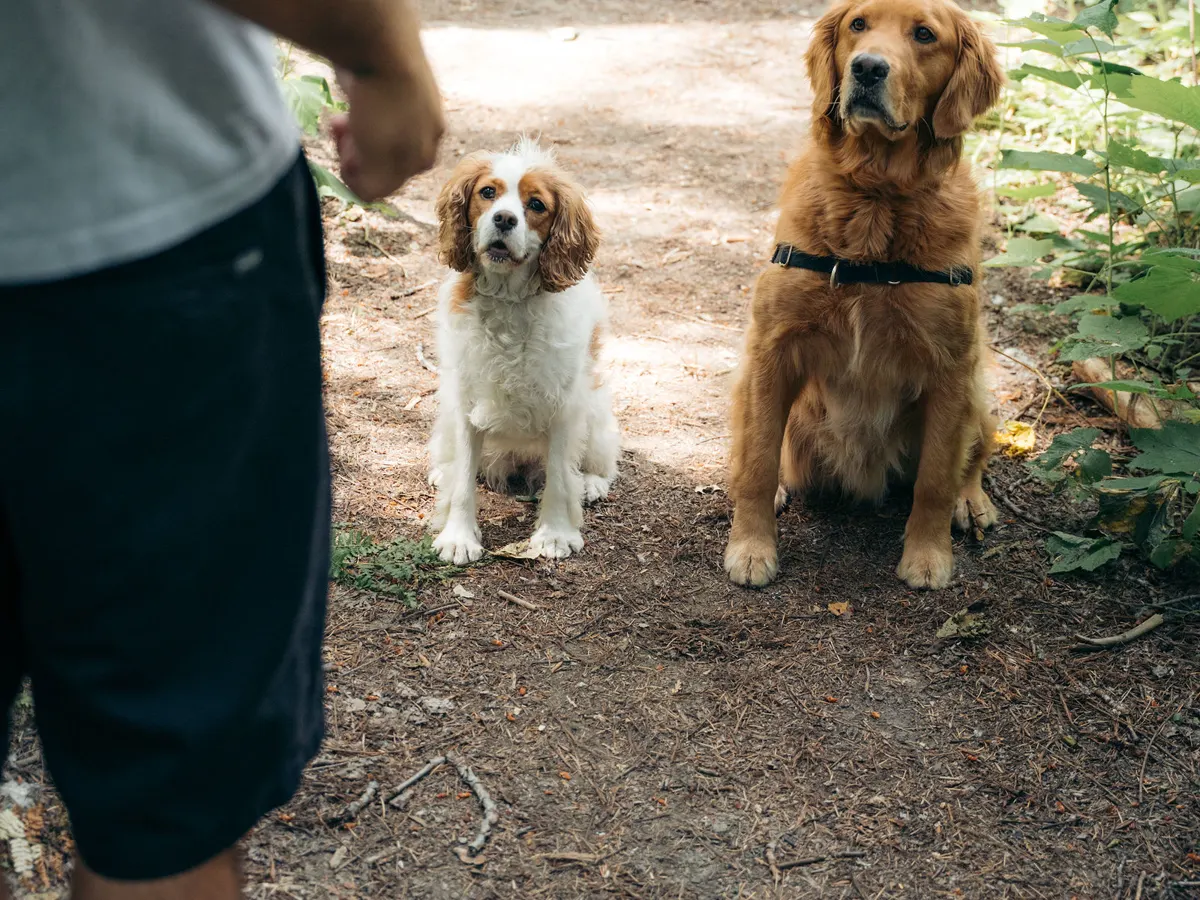
What happens on a first walk with us
Nobody is dropped into a pack on day one.
- The meet & greet. A full hour at your home with the walker who will actually take your dog out. We meet your dog on their own turf, see how they might fit with a pack, and go over gate codes, leash, harness, treats and any medications. It is $50 + GST ($25 for each additional dog), with no obligation afterwards.
- A walk together, then one-on-one. We start with a walk together, then a one-on-one with your walker, then your dog joins the pack.
- On leash first. New dogs start on leash or a long line. New pairings get watched closely for the first few walks.
- Off-leash is earned. A dog who passes the trail-readiness check goes off-leash. A dog who loses their recall goes back on the line until it is solid again.
For how a full hike runs, what we carry and what it costs, see our guide to group dog walks in Whistler.
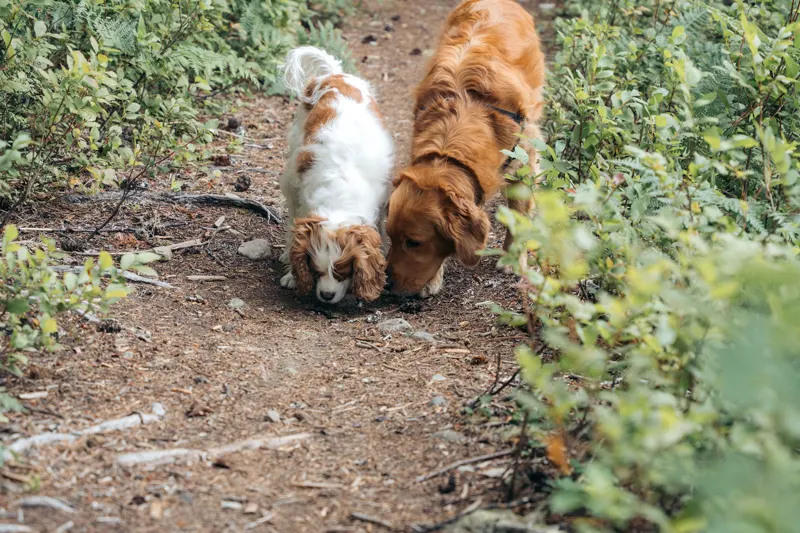
“Not ready yet” is a normal answer
If your dog is shaky on two or more of the five, we would rather tell you than squeeze them into a group. Our Private Adventure Walk ($58) is the bridge: one-on-one trail time for reactive or anxious dogs, puppies, seniors and dogs recovering from injury, with a full debrief afterwards. Plenty of dogs start private and join a pack once they are ready. Not sure which is right? The 60-second quiz helps, and so does a meet & greet.
When walks aren’t enough yet
We are dog walkers, not trainers. When a dog needs more than time on the trail, we point owners to our training partner, Modern Dog Training, run by Abbey Smyth. Abbey is BC SPCA AnimalKind accredited and uses force-free, reward-based methods only. You can read more on our dog training page. Here is where each situation tends to fit (prices are Abbey’s, before GST, and can change, so check her site before booking):
- Barking, growling or lunging at other dogs or people. Behaviour coaching starts with a $150 Initial Consultation, then $119 follow-up sessions, or a 4-session Reactive to Proactive package for $450. The work starts at a distance your dog can handle.
- A young puppy. Life Skills: Beginner is a 4-week series for $185, for puppies 8 to 20 weeks with their first vaccinations, in classes of five at most at Myrtle Philip. Pair it with our first 90 days guide.
- A dog who finds other dogs hard. Parallel Walks are $25 a walk, a calm, structured walk where your dog works at a comfortable distance. They run on Thursdays at 5 PM, May to October.
Not sure where to start? Abbey offers a free 15-minute call. When your dog is ready, we would love to meet them.

Is my dog ready for a group walk? FAQs
Can a shy dog join a group walk?
Often, yes. Shy is not the same as reactive. A dog who is nervous but curious, and who can still take a treat or check in with their person, usually does well in a small pack with a patient walker. If your dog needs real distance from other dogs, a private walk or some work with a trainer first is kinder, and we will tell you honestly which fits.
My dog pulls on the leash. Is that a dealbreaker?
No. Pulling at pick-up is common and fixable, and it is not what we screen on. What we care about is that your dog is not hauling toward other dogs in a way that tips into frustration. Loose-leash skills are something a trainer can build, and we start every new dog on leash or a long line anyway.
Is my puppy too young for a pack walk?
Many puppies are better off with one-on-one time first, while they learn manners and build confidence. A Private Adventure Walk suits that stage, and a puppy class with Modern Dog Training gives them structured practice around other puppies. Our new puppy guide covers the first 90 days.
What if my dog doesn't get along with the pack?
It happens, and it is not a failure. We build packs by energy level, play style and temperament, and we watch new pairings closely for the first few walks. If a dog is not settling, we adjust the group or move to private walks before anyone is pushed through it.
Not sure where your dog fits?
Book a meet & greet and we will tell you honestly whether a pack, a private walk or some training first is the best start. Or take the 60-second quiz.