Why Socialization Matters More Than Obedience
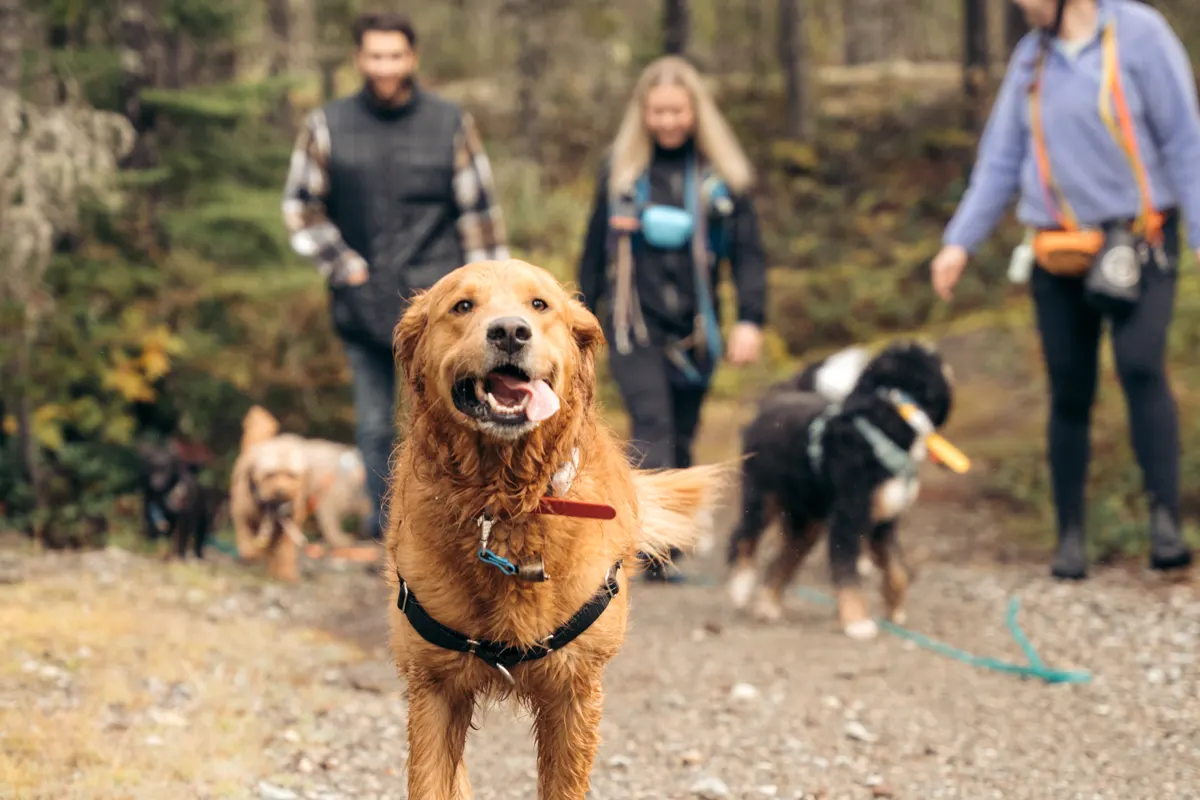
Owners ask us about recall. They ask about pulling, about jumping, about whether their dog will sit at the trailhead while the group gets organised. The question we love hearing is a different one: can my dog enjoy a morning on the trail with five other dogs and come home relaxed?
That skill isn't obedience. It's social confidence, and the good news is that it can be built at any age.
Canada's vets put socialization right at the heart of raising a happy dog. The Canadian Veterinary Medical Association's position on humane dog training calls good socialization and kind, reward-based training the best foundation a dog can have. We see why every week. A dog who's comfortable around other dogs, people and noise gets to come along for more of life, and that makes for a closer bond with you.
The short version. Socialization isn't "meeting lots of dogs." It's a dog learning that other dogs, people, bikes and noise are normal and nothing to worry about. Calm, positive experiences build that, one good day at a time.
What socialization actually means
The word often gets used to mean "play with other dogs." It's bigger than that. Socialization is teaching a dog that the world is predictable and safe. A well-socialized dog isn't the one who greets every dog. It's the one who can happily walk past one.
Aim for relaxed first and friendly second. Relaxed is what lets a dog enjoy a trail shared with mountain bikers, a leashed dog coming the other way, and a marmot in the rocks above. Friendly is a lovely bonus on top.
One thing we often notice: a dog who pulls hard toward every other dog gets called "so social," but is often more frustrated than confident. Helping that dog feel calm around others is some of the most rewarding work we do.
The first three months do a lot of the work
Puppies learn fastest in their first three months, and many vets now suggest starting gentle socialization before the vaccine series is finished. The CVMA recommends meeting healthy, vaccinated, friendly dogs during that time. Ask your vet what's right for your puppy.
Practically, that looks like carrying your puppy to new places, using clean surfaces, and meeting dogs you know are healthy and vaccinated. Quality matters more than quantity. Ten calm, easy meetings beat one hectic afternoon at a busy park, because the goal is a puppy who finds other dogs pleasantly ordinary. Our guide to your puppy's first 90 days in Whistler has a full checklist.
It keeps going past sixteen weeks
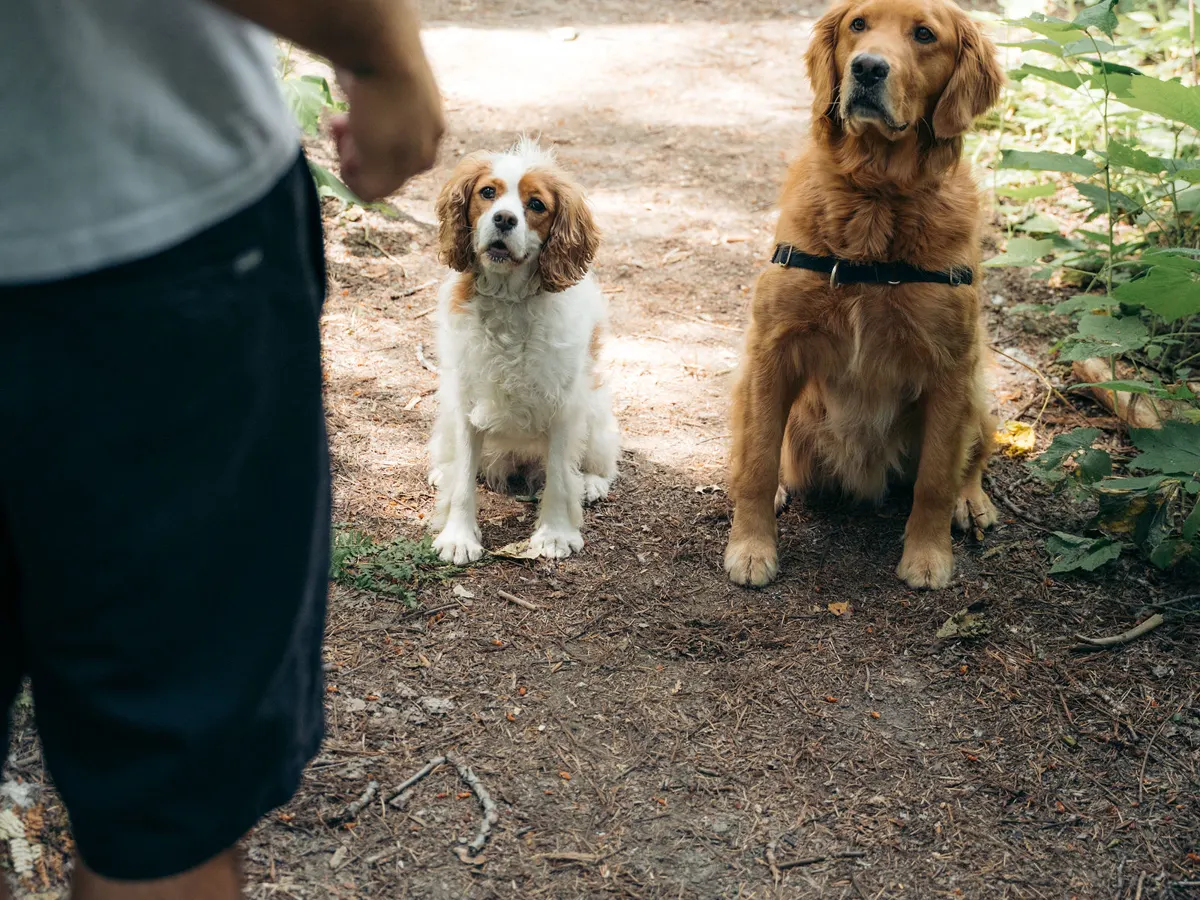
The puppy window is the easiest time to do this work, but social skills grow all through a dog's life, and they stay strongest with regular practice.
Adolescence can test your patience. A 2020 study in Biology Letters found that dogs around eight months old went through a "teenage" phase where they listened less, especially to their own owners. The phase is normal and it passes. Keep going out, keep it positive, and you'll come through the other side with a great adult dog.
Adult dogs thrive on routine social time the same way they thrive on exercise. Regular walks with the same friendly dogs keep those skills fresh for life.
A good social life is good for health, too
The Dog Aging Project looked at more than 21,000 companion dogs and found that dogs with more social support tended to be healthier. It's one study and it can't prove cause, but it matches what we see on the trail every day: dogs with friends seem to live happier lives.
Why the dog park isn't the best place to learn
Clients sometimes ask why we don't just use the off-leash park, so here's our thinking.
At a dog park, nobody checks who's a good match. The mix of dogs changes every twenty minutes, and there's no one whose job is to guide the group. For a confident adult dog with an owner who's watching, that can be a fun outing. For a puppy, a teenager, or a dog who's still unsure, it's a lot to take in at once.
We think of the park as a place to enjoy social skills, not the place to learn them. Learning goes best in a small, steady group where every experience is a good one.
What good socialization looks like in practice
Here's what we do, and what we'd look for in any walker.
The same dogs, most weeks. Our small pack groups stay stable. A dog learns far more from six familiar friends seen every Tuesday than from thirty strangers seen once. Familiarity is what lets a shy dog relax by week four.
Small groups. We walk a maximum of six dogs per walker, so every dog stays in sight and in reach.
Thoughtful matching. We match every dog to the group that suits them. Dogs who'd enjoy quieter time go on private adventure walks instead, which is often the happiest fit anyway.
Walkers who read the room. The real skill is noticing the moment a dog needs a break and giving it one, which is the subject of our guide on reading play and on the ten behaviours we read every day.
Kind equipment only. No prong, shock or choke collars, ever. The BC SPCA's advice on choosing humane, reward-based care lines up with ours: dogs learn best when they feel safe.
What to ask anyone who walks your dog
Dog walking isn't a regulated trade in Canada, so it's worth asking a few questions. The BC SPCA's AnimalKind program has published voluntary standards for pet care services, a helpful guide while formal accreditation for walkers is still on the way.
Five questions worth asking, in any town:
- How many dogs does one person walk at once?
- How do you decide which group my dog joins?
- Who else is in that group, and how often does it change?
- What equipment do you use?
- How will I hear about my dog's day?
A good walker answers clearly and quickly.
Where we sit
We built Doggy Tales around the idea that a great walk is a social experience, guided minute by minute. Every trail walker holds DogSafe Canine First Aid and Fear Free certification, and we follow the Pet Professional Guild force-free standard.
If your dog finds other dogs tricky right now, that's just where they're starting. Tell us in the intake form. Some dogs spend a while on private walks and then join a pack. Some love their one-on-one time for life. Both are great outcomes.
Thinking about a pack walk for your dog?
Got questions first? Send them our way. When you're ready, a free meet and greet lets us find the right fit for your dog.
Sources: CVMA, Humane Training of Dogs (2021); BC SPCA and AnimalKind; Asher et al., Biology Letters (2020); McCoy et al., Evolution, Medicine, and Public Health (2023). This article reflects our experience on Whistler and Pemberton trails and is not a substitute for advice from your veterinarian