Keeping Dogs Safe in the Heat: Our Whistler Hot Weather Guide
Our four-legged friends are much more sensitive to the heat than we are. As canine guardians, it's our responsibility to ensure our pups stay healthy and comfortable when temperatures rise. With Whistler's summer heat waves becoming more intense, understanding heat safety is essential.
Preventing Heat Exhaustion & Heatstroke
- Keep water dishes filled with fresh cold water — adding ice cubes can encourage hydration on hot days.
- Avoid outdoor activities during peak temperature hours — opt for early morning or late evening walks when the air is coolest.
- Stay off pavement and asphalt — dogs' paw pads blister easily on hot surfaces. If it's too hot for your hand, it's too hot for their paws.
- Choose shaded trails with fresh water access — carry extra water and a collapsible bowl. Take frequent shade breaks.
- Never leave dogs in parked vehicles — even with windows cracked, car interiors heat up dangerously fast.
If You See a Dog in Distress in a Vehicle
Contact the RCMP or BC SPCA immediately at 1-855-622-7722. Do not attempt to break into the vehicle unless the animal is in immediate life-threatening danger.
Symptoms of Heat Exhaustion & Heatstroke
Knowing what to look for can save your dog's life. Watch for these warning signs:
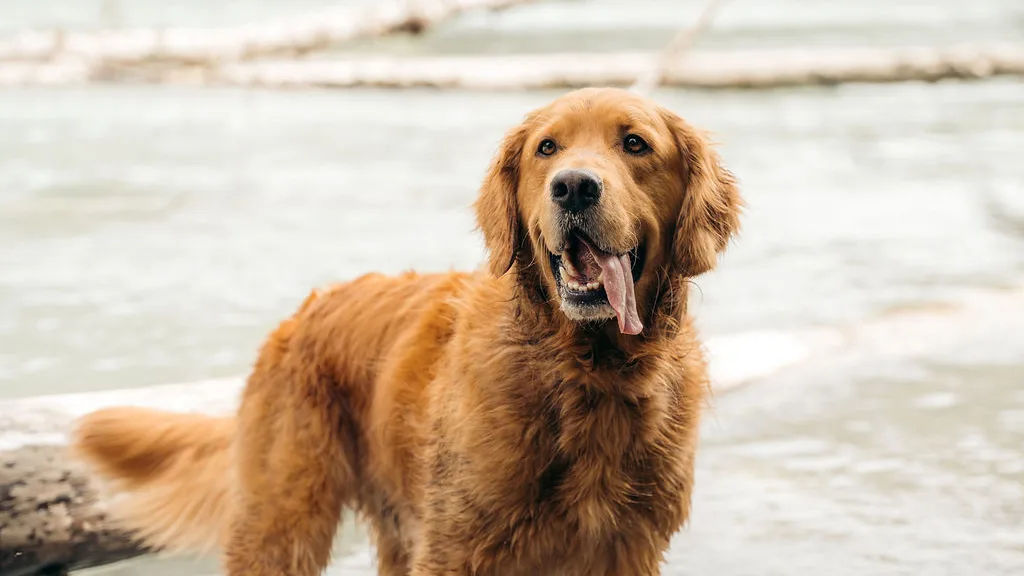
- Excessive or abnormal panting
- Dehydration indicators: dry nose, tiredness, sunken eyes
- Abnormal or heavy drooling
- Fever (106°F / 41°C or higher)
- Lack of urination
- Shivering and shaking despite the heat
- Lethargy, weakness, or dizziness
- Vomiting, diarrhoea, or bloody stools
Treatment Steps
If you suspect your dog is suffering from heatstroke, act quickly:
- Move your dog to a cooler indoor area with a fan or air conditioning.
- Apply cool (not cold) water to their body, focusing on the ears and paw pads where blood vessels are closest to the surface.
- Stop cooling once temperature reaches 103°F (39.4°C) — over-cooling can cause new complications. Offer lukewarm water to drink.
- Contact your veterinarian immediately — even if your dog appears to be recovering, internal damage may have occurred.
- Seek emergency care if your dog loses consciousness, vomits severely, or has seizures.
Flat-Faced Breeds Need Extra Care
Brachycephalic breeds (Bulldogs, Pugs, Boston Terriers, Shih Tzus, and similar) require extra monitoring because their shortened airways reduce panting efficiency. These dogs overheat faster and recover more slowly.
Our Hot Weather Policy
We don't leave hot-day decisions to guesswork. Doggy Tales runs a written hot weather policy with clear temperature thresholds, so every walker makes the same call and every client knows exactly what to expect before the forecast climbs.
We take the forecast high for Whistler and cross-check it between The Weather Network and the Government of Canada forecast at weather.gc.ca. Where the two disagree, we plan for the hotter of the two. Both thresholds also require sun — a 27°C overcast day is a very different walk from a 27°C bluebird day, and we don't treat them the same.
Because the day's heat usually peaks in the afternoon, we watch the hour-by-hour forecast rather than a single daily high, and move the schedule around it.
Above 26°C and sunny — walkers may shorten the walk
Your walker has full discretion to cut a walk short when they judge it too hot — they're the one on the trail who can feel the heat, feel the ground, and read your dog. A shaded route with water the dogs can get into might run its normal length; an exposed trail in full sun won't. Either way your dog still gets out, gets moving, and gets home before the heat stacks up.
Above 29°C and sunny — walks move to the morning
We run both walk groups in the cooler morning window, so no dog is on the trail during the hottest part of the day. In practice that means an afternoon walk becomes a morning walk for the day — we'll always let you know.
Above 32°C and sunny — afternoon walks are cancelled
At this point the afternoon is no longer a safe place for a dog, so afternoon walks come off the schedule and any morning walks are kept short. Whenever we cancel a walk, two things happen automatically:
- You are not charged. Free cancellation, every time. You never have to ask.
- We offer an adjusted private neighbourhood walk in its place. A short, close-to-home visit instead of the group walk — enough to let your dog relieve themselves, get a little mental stimulation, top up their water, and get some cuddles so they're settled until you're home from work.
Why we offer a private walk instead of simply cancelling
Cancelling a walk on the hottest day of the year shouldn't mean your dog is left waiting. The private neighbourhood walk swaps a dangerous hour on the trail for a safe, low-key visit close to home — same care, none of the risk.
Every day, regardless of the forecast
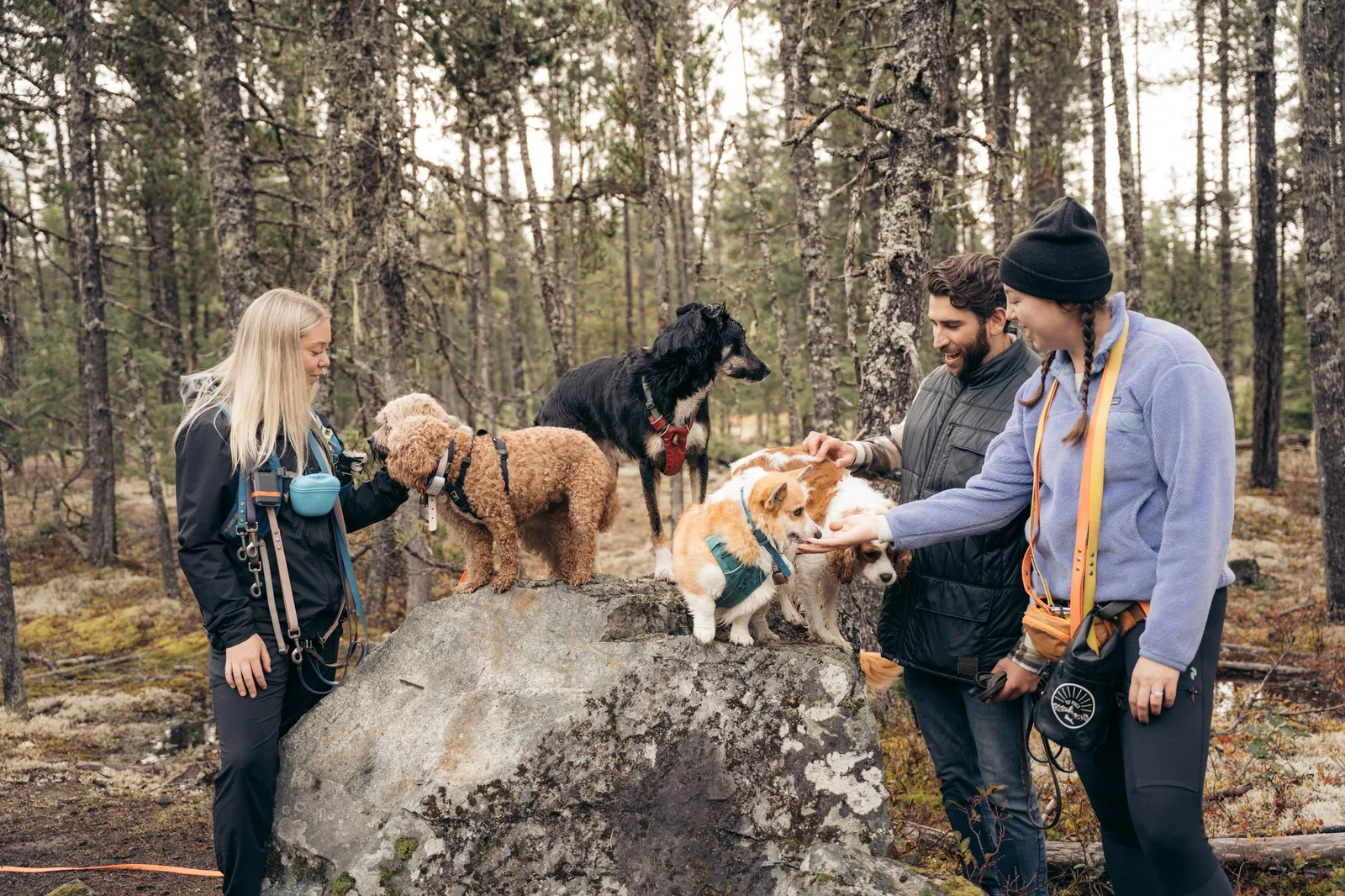
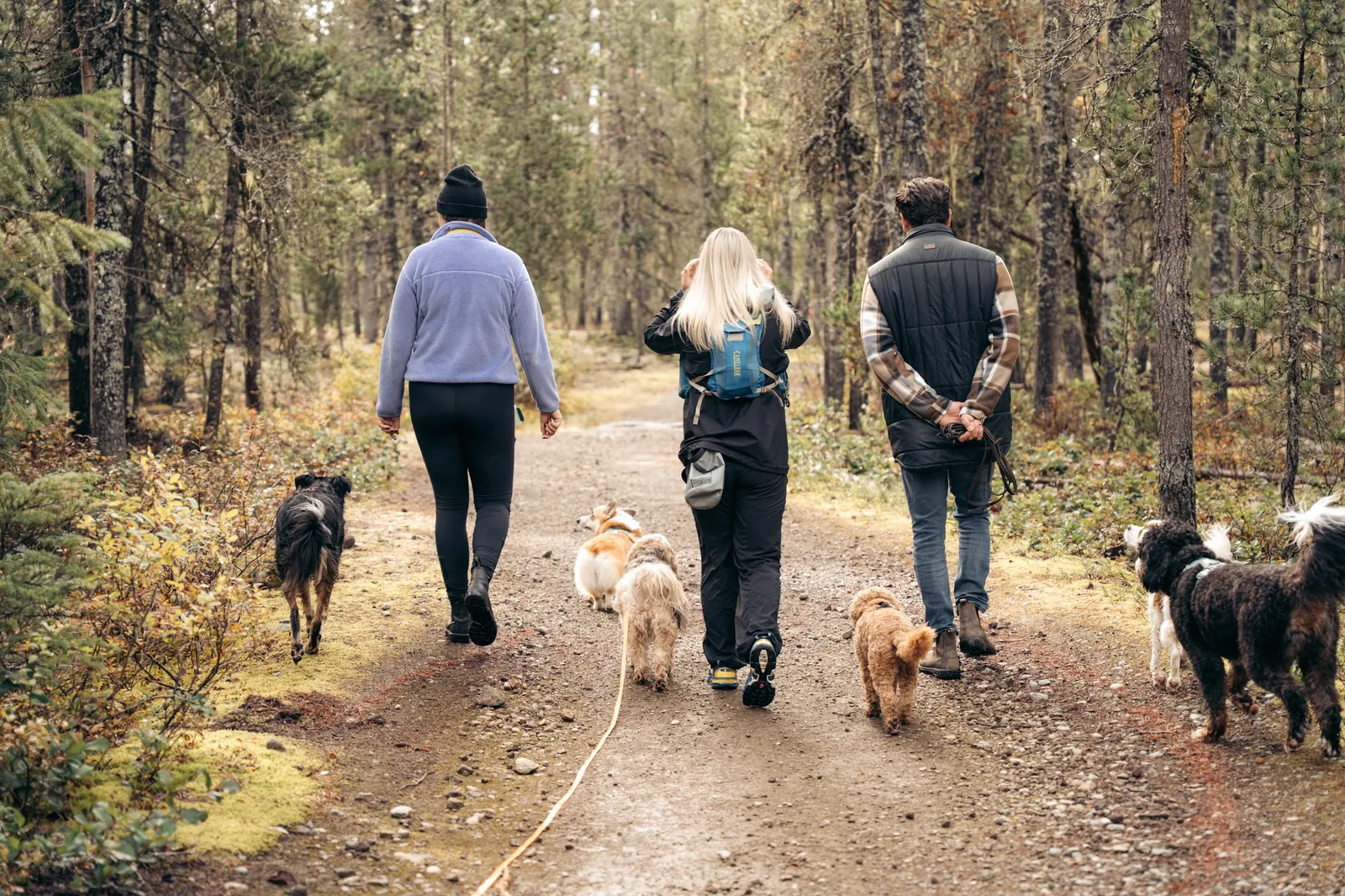
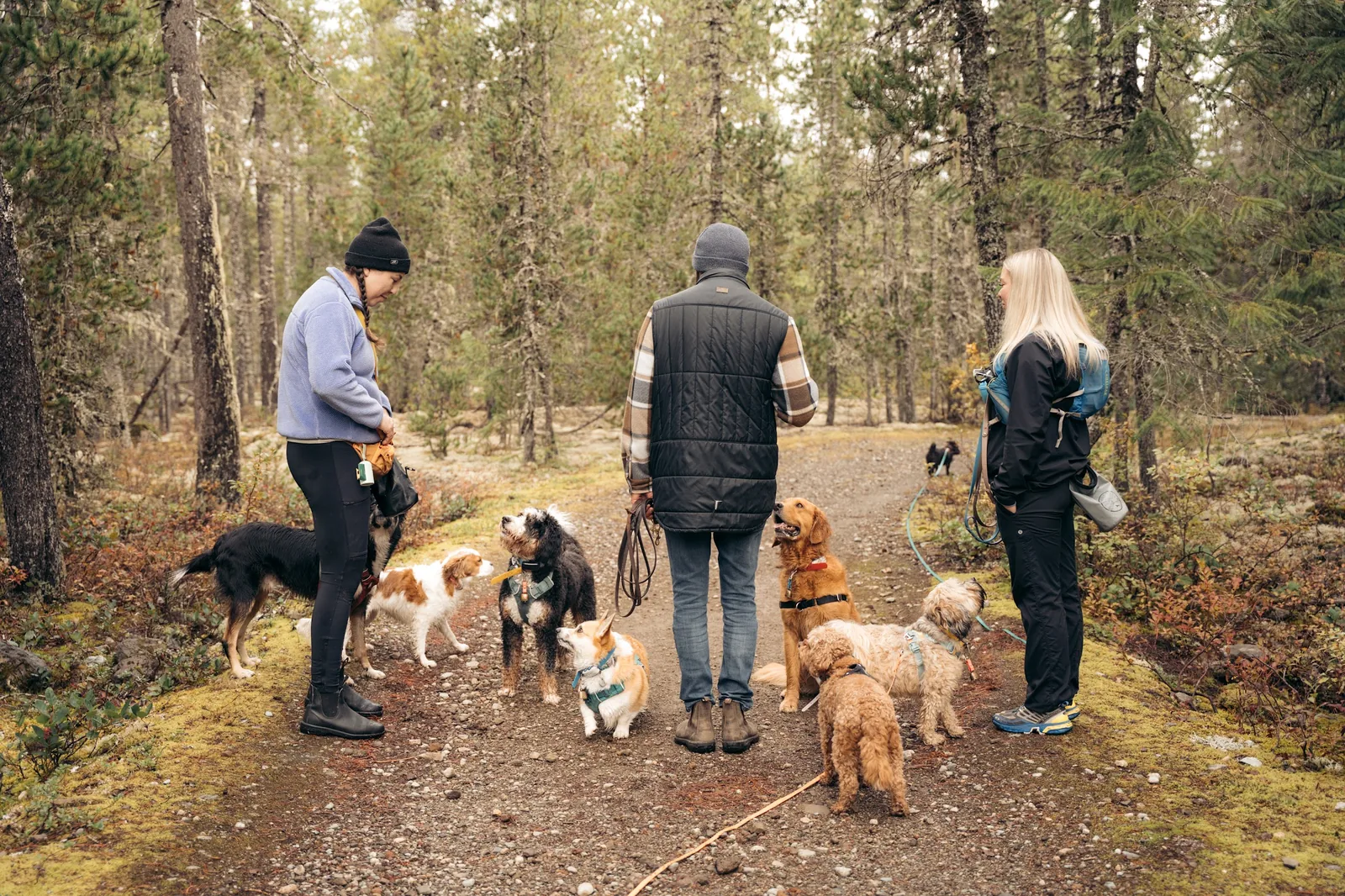
Our AM walks start early to beat the heat, and we favour shaded forest trails with access to streams or lakes. Every walker carries extra water, collapsible bowls, and a cooling towel. Walkers have standing authority to bring a dog home early based on what they see on the trail — heavy panting, lagging, hot ground — without checking in first.
Flat-faced breeds, seniors, puppies under six months, and overweight dogs are all treated as one category hotter than the thermometer reads. And when in doubt, we call it: a short safe walk beats a heat emergency, every time.
This policy costs us bookings on the hottest days of the year. We think that's the right trade. Our job is to keep your dog safe, happy, and healthy — and no adventure is worth risking that.