Bear Safety for Dogs in Whistler: A Trail Guide
Summer in Whistler means longer trail days, warmer temperatures — and bears. The Resort Municipality of Whistler is home to an estimated 50 black bears that actively share the trails, greenways, and forested neighbourhoods we walk through every day. Grizzly bears are a different story: they remain a rare sight in the Whistler corridor, typically appearing only as transient visitors from the Pemberton area. But whether you are dealing with a curious black bear or an unexpected grizzly sighting, the stakes go up the moment a dog is in the picture.
Research from BC Parks shows that dogs are involved in a disproportionate number of bear injuries to humans — often because a dog runs at a bear and then retreats to its owner, drawing the bear with it. That dynamic changes everything about how we manage risk on off-leash walks. Here is what every Whistler dog owner should know.
Black Bears in Whistler: What to Expect
Whistler’s black bears are active from April through November, with peak sightings in June and July as they move to lower elevations to forage on berries, roots, and early-season vegetation. They are highly food-motivated and more tolerant of humans than grizzlies — which makes complacency the real danger.
Common encounter zones include the Valley Trail corridor, forested sections around Lost Lake, Alta Lake Road, and the Pemberton Trail. The RMOW’s Living Alongside Wildlife program has managed Whistler’s bear population since the town became a Bear Smart Community — one of fewer than a dozen in BC. Their wildlife team monitors individual bears by name and tracks movement patterns throughout the season. Checking their advisories before a trail outing is worth two minutes of anyone’s time.
Grizzly Bears: Rare but Real
Grizzly bears do not have an established resident population in Whistler, but occasional sightings have been confirmed — particularly in the upper Callaghan Valley and along mountain bike trails that extend toward Pemberton. When a grizzly is confirmed in the area, the RMOW typically closes affected trails immediately.
The key difference in a grizzly encounter: do not make direct eye contact, do not run, and back away slowly while speaking calmly. Bear spray is effective against both species — studies consistently show it outperforms firearms in close encounters. If a grizzly makes contact, play dead (lay flat on your stomach, hands laced behind your neck). With black bears, fight back.
Prevention on the Trail
The best encounter is the one that never happens. These are the steps we follow on every Doggy Tales walk:
- Make noise continuously — talk loudly, clap, use bear bells on every dog. Bears almost always retreat when they hear humans coming.
- Stay alert for sign — fresh scat, disturbed ground, overturned rocks, and claw marks on trees all indicate recent bear activity in the area.
- Avoid dawn and dusk — bears are most active during low-light hours when foraging is at its peak.
- Check RMOW wildlife advisories before every outing. Advisories are updated in real time when a bear is spotted near a specific trail.
- Keep dogs close near berry patches and creek crossings — these are prime foraging spots where a dog can stumble onto a bear before either of you has time to react.
- Leash up in areas with posted wildlife activity — per Whistler’s dog bylaws, dogs must be on-leash in areas where wildlife activity has been reported. Off-leash areas are not exempt when a bear advisory is active.
How to Prepare Before You Head Out
- Carry bear spray and know how to use it — that means practising the safety clip removal until it’s muscle memory. Bear spray is most effective at 7–10 metres. Holster it where you can draw in under two seconds.
- Carry an air horn — effective for deterring an approaching bear at a safe distance without getting close enough to deploy spray.
- Invest in rock-solid recall — a dog that returns on command the first time, even when distracted, is genuinely safer off-leash in bear country. If recall breaks down around wildlife, the trail is not the place to work on it.
- Take a wildlife safety course — WildSafeBC offers free online modules and runs community workshops in Whistler each spring. Fifteen minutes of learning pays dividends on every summer walk.
The Off-Leash Reality
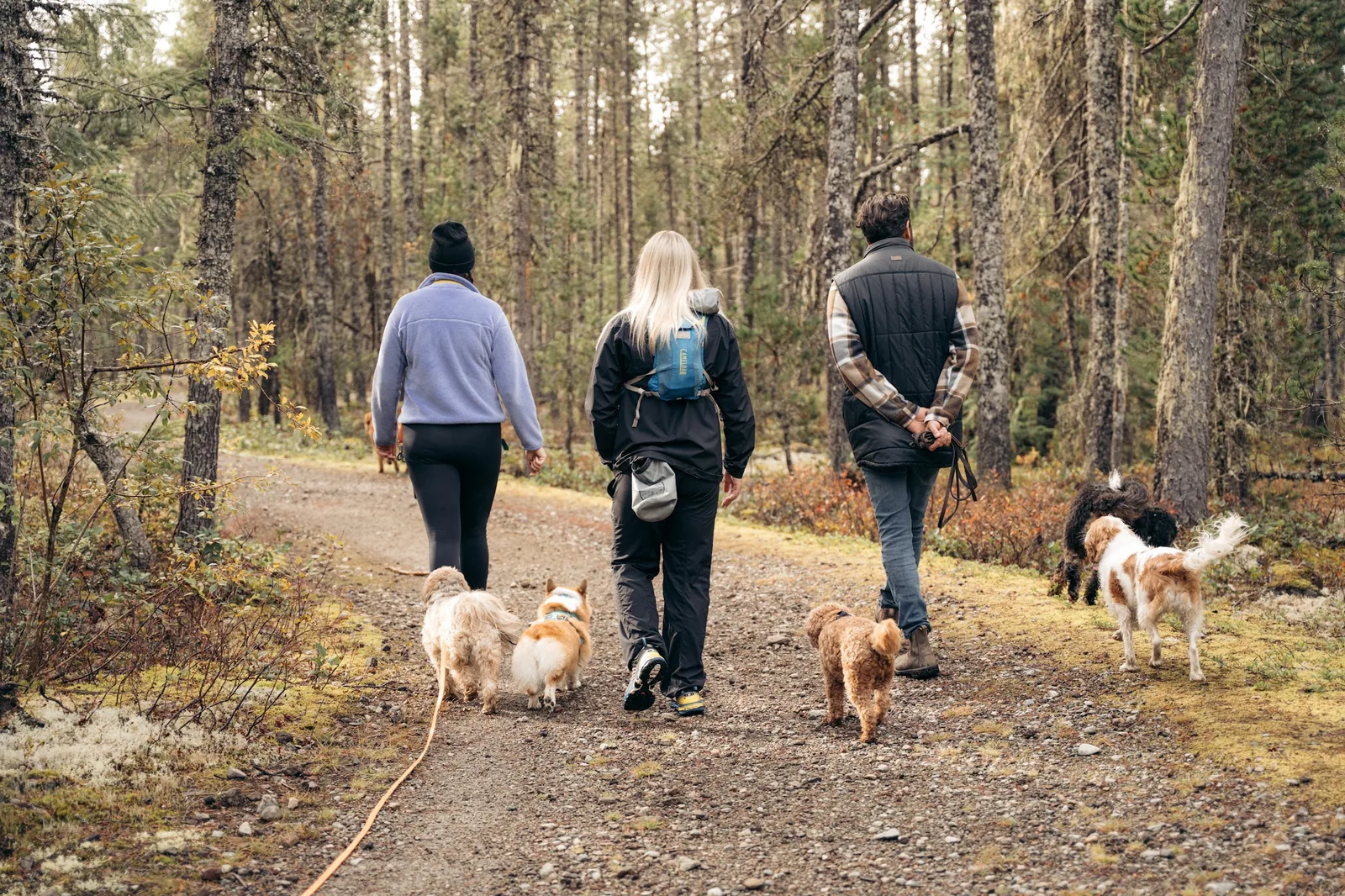
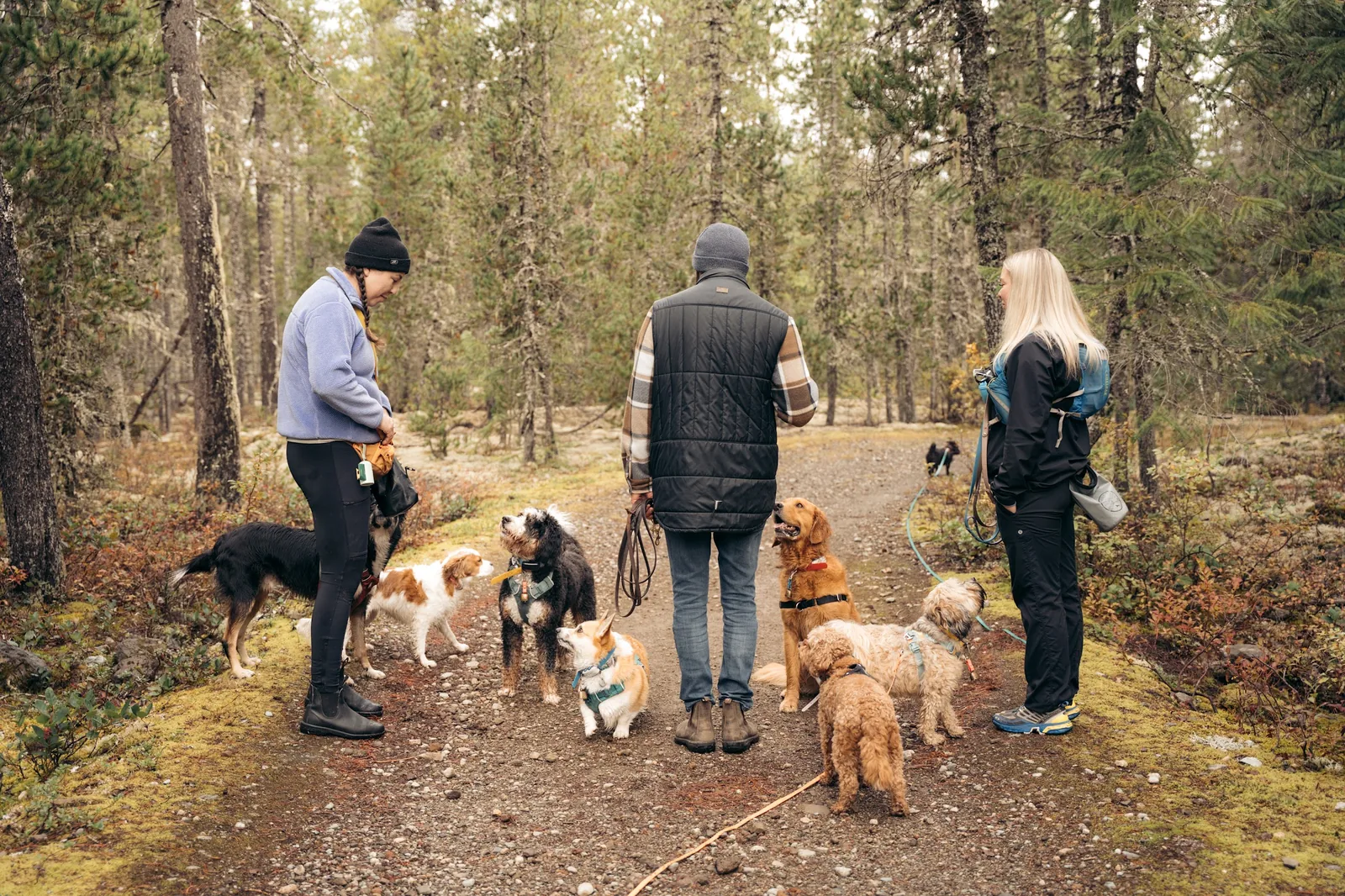
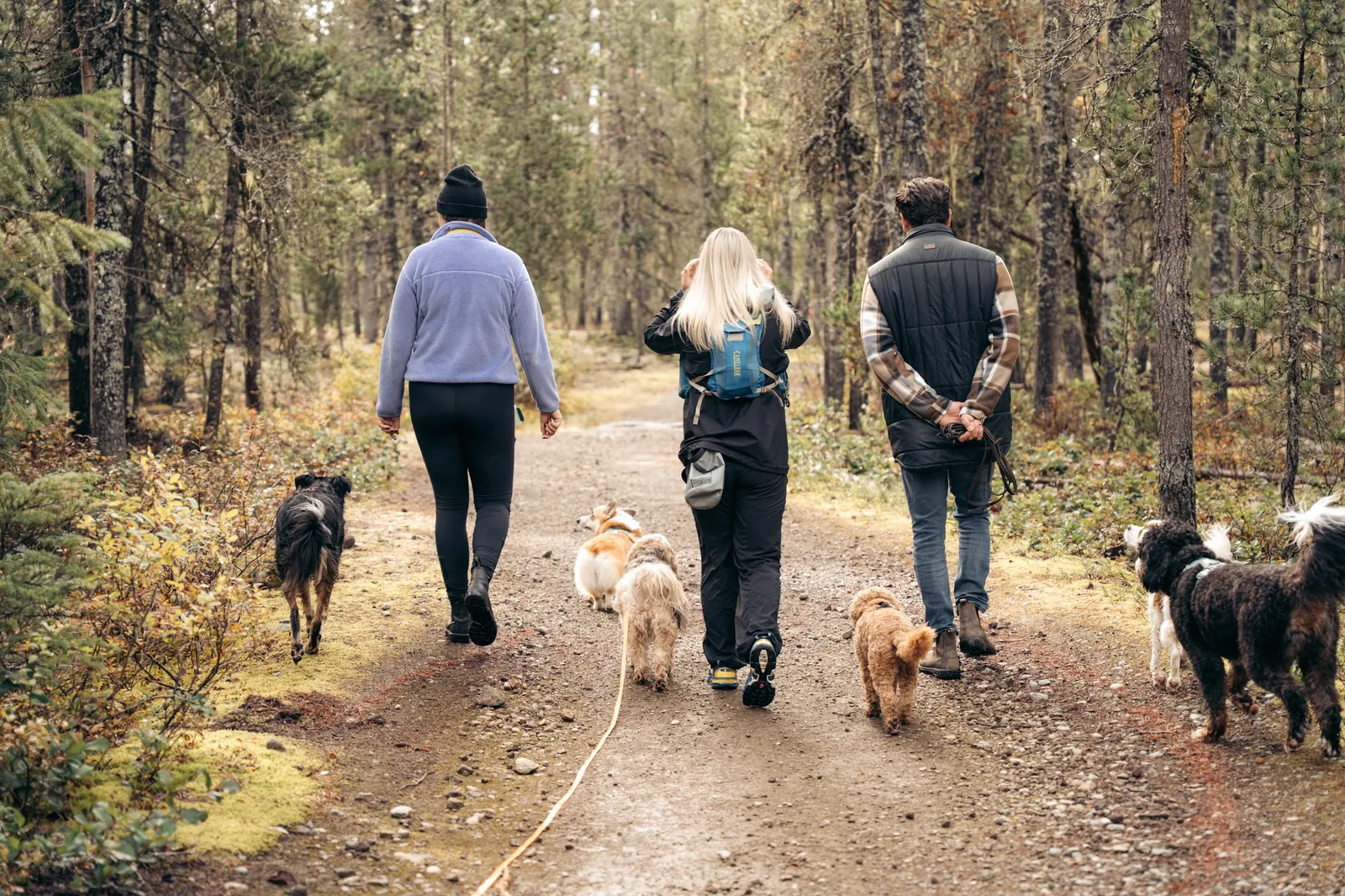
Even well-trained dogs can break recall when a bear is involved. The bear-charge-and-retreat scenario (dog provokes bear → bear chases dog → dog runs to owner) is the leading cause of bear-related injuries to humans in BC. At Doggy Tales, we use waterproof long lines and Tractive GPS trackers on every dog in our care during bear season — giving us control without compromising the walk experience. We also carry bear spray at the front of the pack, accessible in under two seconds.
What We Carry at Doggy Tales
Every Doggy Tales walker heads out on Whistler’s trails with a full wildlife safety kit, no exceptions:
- Bear spray (holstered, accessible at all times)
- Air horn
- Bear bells on every dog
- Waterproof long lines for controlled off-leash sections
- Tractive GPS tracker on every dog
- Dog first-aid kit
- SPOT emergency satellite device
- Pack-a-Paw rescue harness
- Dedicated leash for each dog (even fully off-leash dogs)
We also monitor RMOW wildlife advisories every morning before walks depart and route-adjust in real time if a bear is reported on our planned trail. If an area is posted, we move — no exceptions. Your dog’s safety (and our crew’s) always comes before the original plan.
Bear season in Whistler runs April through November. If you would rather hand the wildlife calls to a dog walker in Whistler who reads the advisories every morning, that is our job. Stay informed with RMOW wildlife updates and enjoy the trails.