Best GPS Trackers for Your Dog on Whistler Trails
Short answer: Fi wins on battery and price, Tractive wins on live tracking, and Dogtra’s Pathfinder2 TRX is the one that keeps working once the cell bars disappear deep in the Pemberton backcountry — because it’s the only one of the three that doesn’t depend on a cell network at all. Here’s the breakdown, with real Canadian pricing and the limits each brand doesn’t put on the box.
Fi vs. Tractive vs. Dogtra Pathfinder2 TRX, side by side
Every number below is current as of November 2026, sourced from each brand’s own spec pages and listings, linked where it matters. Prices are in Canadian dollars.
| Tracker | Live update rate | Battery | Cost (CAD) | Fit | Needs cell signal? |
|---|---|---|---|---|---|
| Fi | Checks in periodically; not built for second-by-second live tracking | Weeks, not days | Collar + 1-year membership bundled at $279 CAD on Amazon.ca, renewing near that rate yearly | Standalone collar, 5 sizes (XS–XL) | Yes — AT&T network, roams into Canada but coverage thins in rural areas |
| Tractive | Every 2–3 seconds in Live Mode | Up to 14 days in Power Saving mode, ~6 days without | Tracker ~$99 CAD, plus Basic $132/yr or Premium $156/yr (Canadian pricing breakdown) | Clips onto your own collar, up to 3–4 cm wide | Yes — Tractive confirms cell coverage is required |
| Dogtra Pathfinder2 TRX | Every 2 seconds, direct radio link | 2.5-hour rapid-charge battery; Dogtra doesn’t publish a multi-day runtime figure | Collar $384.99 CAD + required GPS Connector ~$270.99 CAD, one-time, no subscription | 12.5" minimum neck size, dogs 35 lbs+ | No — direct collar-to-app radio link, up to ~8 km / 9 miles |
The cell-coverage catch
Fi and Tractive are both cellular trackers: the collar needs a signal to send your dog’s position to your phone. Around the village and most front-country trails that’s a non-issue, but push further up a Pemberton valley or into thicker alpine terrain and the signal can drop out, which just means the map holds the last point it had until the signal comes back — it doesn’t mean the tracker broke. Dogtra’s system skips cell service entirely by talking straight to a handheld or your phone over its own radio link, which is the honest reason to pick it for deep backcountry days.
Fi: the easy, low-maintenance pick
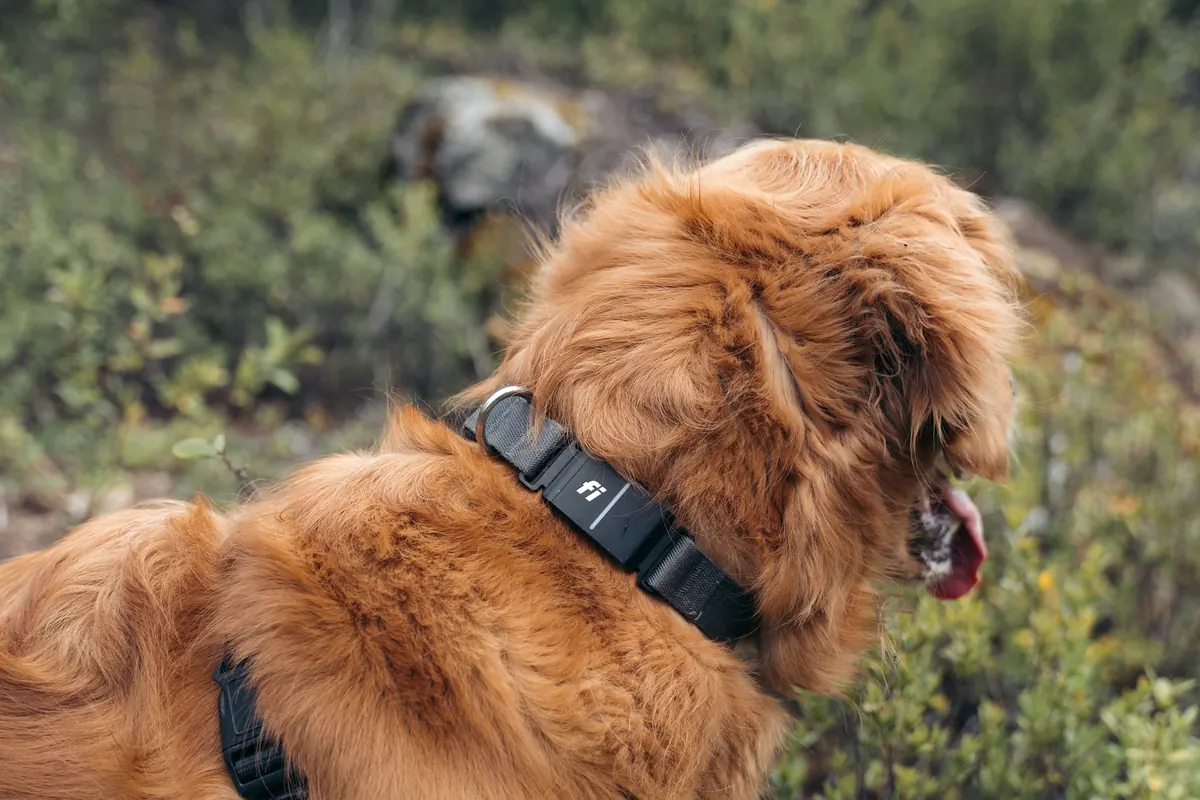
Fi is the everyday collar we point most owners toward: GPS, escape alerts and a battery measured in weeks rather than days, with no training hardware anywhere in the range. It’s a full standalone collar rather than a clip-on add-to-your-own-collar tracker, which means less to fiddle with, and the escape alert is genuinely useful for a dog that tests fences or doors. The trade-off is update speed: Fi isn’t built for watching a live dot move in real time the way Tractive is, so it suits a dog who mostly roams around a yard or property with the occasional trail day, more than a dog who’s off-leash on technical terrain every outing.
Tractive: the most responsive live tracking
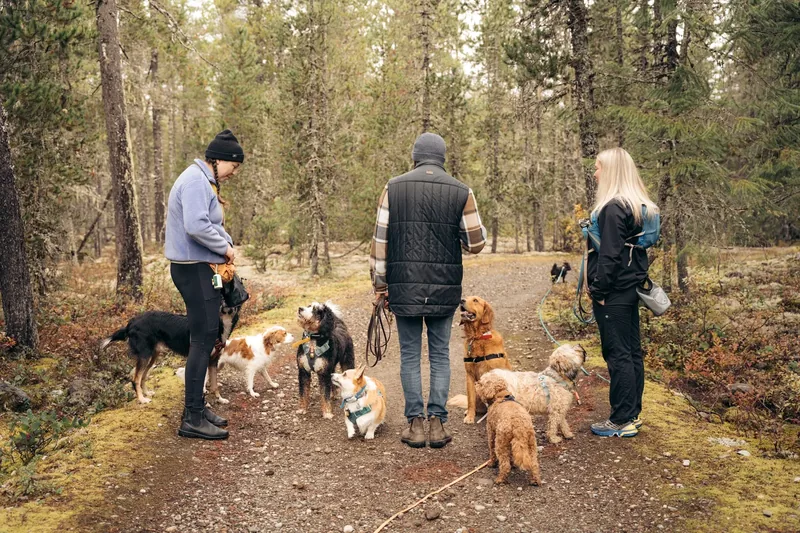
Tractive updates location every 2–3 seconds in Live Mode, plus activity monitoring and virtual fences, and it’s tracking-only hardware with nothing that can deliver a shock. It clips onto a collar your dog already wears rather than replacing it, and the battery runs 6 to 14 days depending on whether Power Saving Zones are set up around home. This is the tracker that goes out with Doggy Tales walkers on every pack walk, because the fast refresh rate matters most when you’re actively watching a group of dogs move through the trees in real time.

Dogtra Pathfinder2 TRX: tracking only, built for no-signal terrain
Dogtra’s name is better known for e-collar training gear, so it’s worth saying plainly: the Pathfinder2 TRX is a tracking-only receiver with no contact points and no stimulation or tone function — it cannot deliver a shock, full stop. What it adds over Fi and Tractive is independence from cell towers: the collar talks directly to a required GPS Connector and the free Pathfinder2 app over its own radio link, good for roughly 8 km / 9 miles depending on the model, with 2-second updates and no monthly fee ever. The cost lands higher up front — collar plus connector runs close to $656 CAD one-time — and it’s built for a bigger dog (35 lbs and up, 12.5" minimum neck size), so it’s a specialist pick: the owner doing real backcountry days past Pemberton’s cell range, not the everyday village dog.
Our pick for most Whistler and Pemberton dog owners
For most dogs walking Whistler and Pemberton trails, Tractive is the one we’d buy, which is exactly why it’s what goes out with every Doggy Tales walker on pack walks today. The fast update rate matches how most trail time actually happens here — front-country routes with decent coverage, where you want to see where your dog is right now, not where it was five minutes ago. Fi is the better buy if your dog’s main risk is slipping out a gate at home rather than ranging off-trail. Dogtra only earns its higher price and bulkier hardware if you’re regularly taking your dog past the point where Whistler and Pemberton cell coverage actually holds. See the full list of what we use and recommend on our gear and partners page, or our recommended dog gear guide for the collars and harnesses to pair with whichever tracker you pick. And if the plan is really just reliable trail time without buying hardware at all, our Whistler trail guide and Pemberton trail guide flag which routes stay in good coverage.
Frequently Asked Questions
Do GPS dog collars work on Whistler and Pemberton trails without cell service?
Not reliably. Fi and Tractive both need a cell signal to send a live location to your phone, so once a trail drops into a valley or climbs away from the village, the map freezes on the dog’s last known point until the signal comes back. Dogtra’s Pathfinder2 TRX is different: it talks directly to a handheld or your phone over its own radio link, up to roughly 8 km, so it keeps working in stretches of the backcountry where Fi and Tractive go quiet.
Is Fi or Tractive better for a dog that hikes a lot?
Fi wins on battery, with a charge lasting weeks instead of days, which matters more if your dog free-roams around home between hikes. Tractive wins on live tracking: it updates every 2–3 seconds in Live Mode versus Fi’s slower refresh, so it’s the better pick for watching a dog in real time on a trail. Both need cell coverage to work, and both are what Doggy Tales walkers actually carry on the trail.
Do I still need a GPS tracker if my dog walks with Doggy Tales?
Every dog on a Doggy Tales pack walk already wears a Tractive GPS tracker that our walkers monitor, so you don’t need your own device for walks booked with us. A personal tracker is still worth it for off-leash time at home, hikes you do yourself, or any trip where your dog could get loose outside a walk.