How Your Dog's Breed Predicts How It Behaves on a Pack Walk
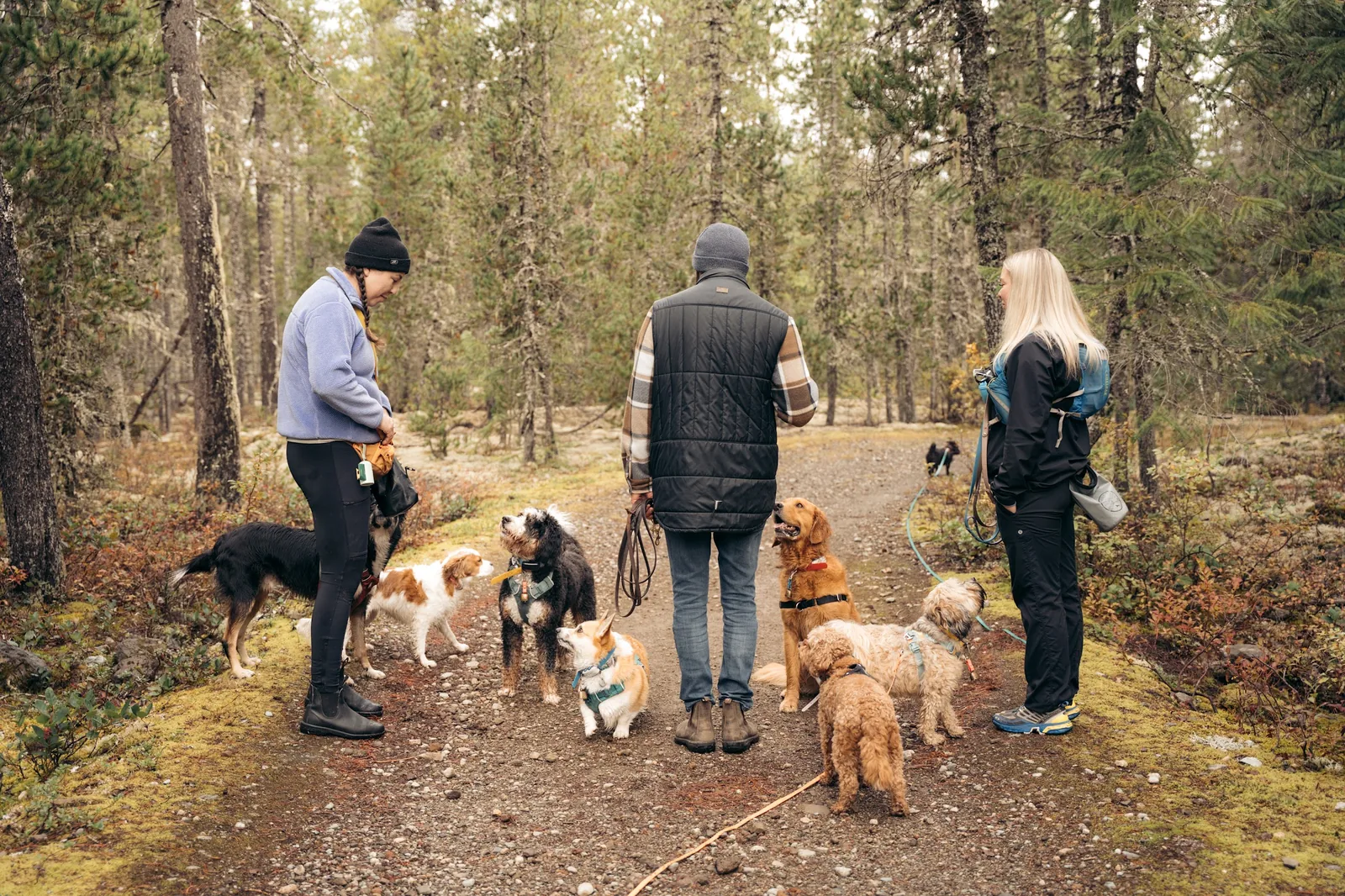
After walking 150+ dogs on the trails around Whistler and Pemberton, one thing has become impossible to ignore: breed group is the single most reliable predictor of how a dog will handle a pack walk. Not the only factor — individual temperament, early socialisation, and training all matter enormously — but the AKC breed group a dog belongs to tells you more about its pack-walk profile than almost anything else you can learn in a 15-minute meet and greet.
Breeders have spent centuries amplifying specific instincts: the urge to herd, to hunt, to guard, to retrieve. Those instincts don't disappear the moment the dog steps onto a forest trail with five others. They activate. The herding dog starts circling the back of the group. The hound locks onto a scent and goes partially deaf. The terrier spots movement in the undergrowth and transforms.
This isn't a knock on any breed — it's just genetics doing exactly what it was bred to do. The more you understand your dog's breed group, the better you can set it up for success in a group setting. And the better we can set it up too.
A note on mixed breeds: If your dog is a mix, look at the dominant traits — the behaviours they actually display — rather than a DNA percentage. A "Lab mix" who chases every squirrel is behaving like a terrier, not a retriever. Behaviour is the signal; breed is the lens.
Herding Breeds — the dogs who try to manage the pack
Border Collies, Australian Shepherds, Belgian Malinois, Shetland Sheepdogs, Heelers
What we see: These dogs enter a group walk and immediately start doing a job — because that's what they were made for. They circle the back of the pack, stare at slower dogs, nip at heels when the group gets spread out, and body-block dogs who try to break away. A Border Collie in a six-dog group often becomes the group's manager before you've hit the first trail junction.
Recall: Excellent to their person — but only until there's something more herding-relevant to do. A loose dog sprinting ahead will override that recall every time.
How we set them up: Give them a job that isn't "manage the other dogs." That means recall games on trail, point-to-point objectives, and "find it" nose work. Burn the brain, not just the legs. Herding breeds often do better with one or two known dogs than in a larger rotating pack — the social complexity is more than they want to manage.
Working Breeds — powerful, focused, and occasionally opinionated
Huskies, Malamutes, Bernese Mountain Dogs, Greater Swiss Mountain Dogs, Boxers, Dobermans, German Shepherds*
(*German Shepherds are AKC Herding but walk like Working — powerful, territorial, mentally demanding.)
What we see: Working breeds split into two camps on trail. The northern breeds — Huskies, Malamutes — are built to run, and a pack walk is the closest thing to a sled run they'll get all week. Their prey drive can be high, their recall is unreliable on scent, and they pull constantly. The other working breeds (Berners, Boxers, BMDs) tend to be calm, socially confident anchors — dogs that lower the group's energy rather than raise it.
Recall: Low-to-moderate for northern breeds, especially off-leash in wildlife corridors. We don't go off-leash with Huskies near known marmot or deer zones — that instinct is too old and too fast.
How we set them up: Long-line training as a bridge for the high-prey-drive working dogs. Burn them out on the leash before any off-leash time. Berner/BMD/Boxer types are often the best group anchors in the pack — we pair anxious or reactive dogs with them intentionally.
Sporting Breeds — the team players
Labrador Retrievers, Golden Retrievers, Spaniels, Vizslas, Weimaraners, Standard Poodles, Setters
What we see: These are, generally speaking, the easiest dogs to walk in a pack. They were bred to work closely with humans in a field setting, reading cues and staying near their person — which translates almost directly into pack-walk readiness. Golden Retrievers in particular are naturals: socially generous, adaptable, and food-motivated enough that recall holds even when things get exciting.
That said, sporting breeds have their own edge. Labs get mouthy and over-aroused. Vizslas and Weimaraners are velcro dogs who can't cope with a walker's attention being split. High-prey Spaniels will flush anything that moves and go momentarily deaf in the process.
Recall: High — among the best of any group — as long as arousal is managed. An over-aroused Lab won't hear you any better than a Husky.
How we set them up: Keep arousal checks early on the walk. A 10-minute calm warm-up on leash before off-leash time prevents the "already running at 100 before we've hit the trailhead" problem. Sporting breeds are usually the dogs we introduce new or anxious dogs to first — they read social signals well and don't push.
Hound Breeds — nose first, ears second
Beagles, Bloodhounds, Coonhounds, Basset Hounds, Greyhounds, Whippets, Rhodesian Ridgebacks
What we see: Two very different profiles here. Scent hounds (Beagles, Bloodhounds, Bassets) are cooperative, social dogs in the pack — right up until they hit a scent trail. At that point, the nose takes over completely and the recall drops to near-zero. Sight hounds (Greyhounds, Whippets) are calm and almost aloof in the group until something moves fast at a distance. Then the chase drive ignites instantly and without warning.
Recall: The most breed-dependent of any group. A Beagle off-scent has fine recall; a Beagle on-scent has effectively no recall. Same dog, two completely different modes. We manage the environment, not just the dog.
How we set them up: We don't rely on scent hound recall in wildlife corridors. Long-line or on-leash when freshly cut trails are nearby. Sight hound owners need to understand that speed and prey drive are a binary switch — there's very little middle ground, and a fence or long-line is the only reliable management strategy until a solid "wait" is built.
Terrier Breeds — small body, enormous opinion
Jack Russells, West Highland Terriers, Scottish Terriers, Cairns, Wire Fox Terriers, Bull Terriers, Airedales
What we see: Terriers are, pound for pound, the most intense dogs in any pack. They were bred to pursue vermin into burrows — which means persistence, independence, and a complete willingness to ignore anything (including you) when they're onto something. In a pack, they're often the instigators: first to start a chase, first to escalate a play session past the point it was welcome, first to go stiff-bodied over a resource.
That's not a bad dog. That's a dog doing exactly what it was designed to do. But it means we need to know the triggers in advance.
Recall: Conditional and confidence-dependent. Some terriers have excellent recall to a beloved person — others treat recall as a casual suggestion. "Leave it" is the cue that actually matters for terriers on trail, and it needs to be bomb-proof before going off-leash in the bush.
How we set them up: Smaller packs work better. Terriers often get overwhelmed (or become the thing overwhelming others) in a six-dog group. We match them with calm, socially-confident dogs who won't react to their energy, and we build in extra impulse-control reinforcement on the way to the trailhead.
Toy Breeds — not fragile, just different physics
Chihuahuas, Pomeranians, Shih Tzus, Maltese, Yorkshire Terriers, Cavalier King Charles Spaniels
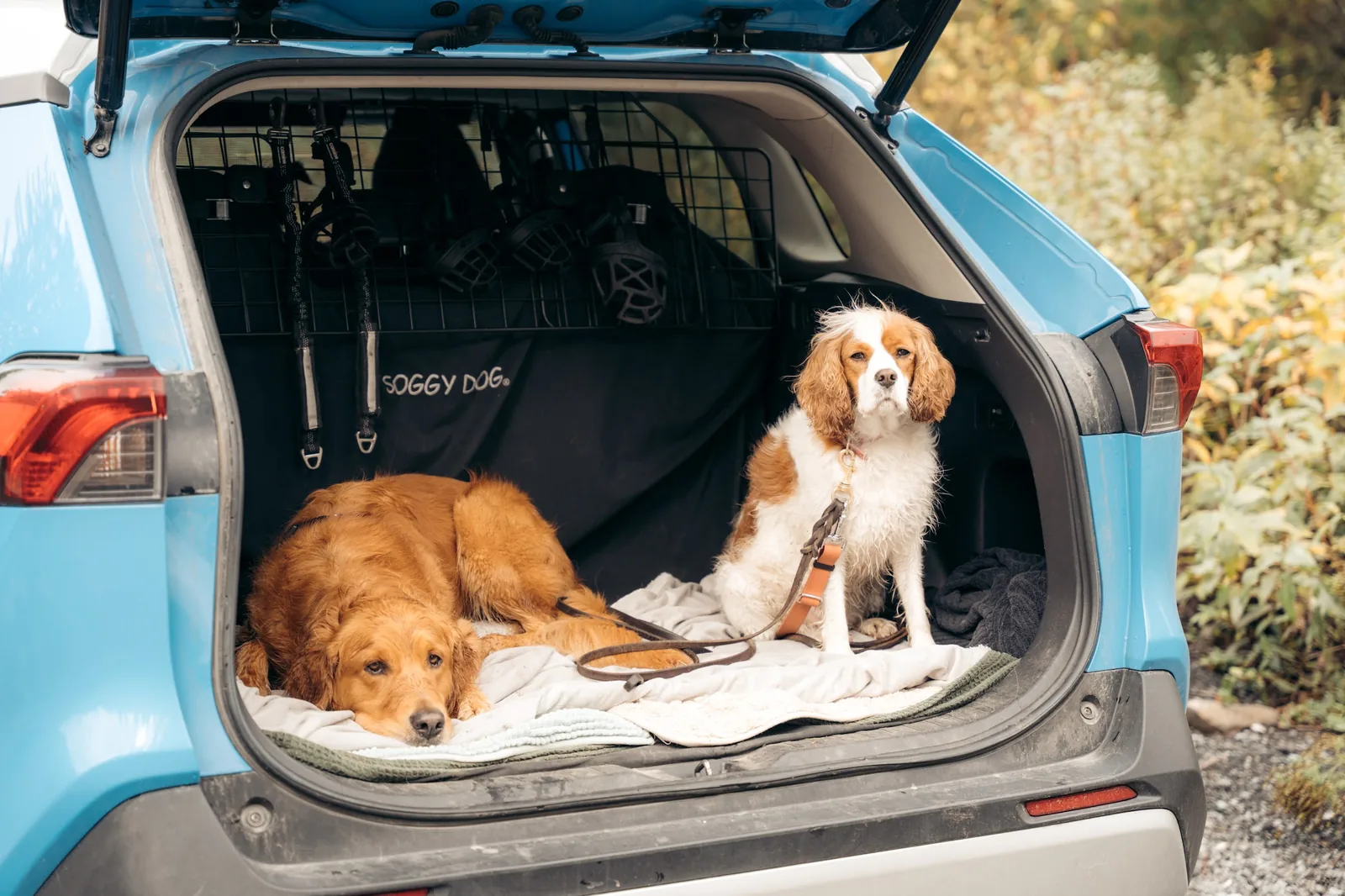
What we see: Toy breeds in a pack get a lot of undeserved sympathy — many of them are absolutely fearless and will challenge a dog three times their size without hesitation. But they do face a real challenge that larger dogs don't: size differential creates risk. A Cavalier King Charles who is technically fine with a Husky playing rough can still get knocked over and hurt, even by completely friendly contact. We take that seriously.
Cavaliers and toy Spaniels are generally lovely pack dogs — social, gentle, emotionally intuitive. Some toy breeds (especially Chihuahuas) can be reactive and anxious in groups, which makes sense given that the world was genuinely not built for them to feel safe in.
Recall: Usually good for toy breeds with training. The bigger issue is stamina and pace — a five-kilometre trail with six larger dogs is a very different physical demand than it looks.
How we set them up: Group composition is everything. We don't put toy breeds in groups with high-arousal, rough players unless the toy dog has a history of holding their own. Routes matter too — shorter, flatter trails for smaller dogs in summer heat. And we always make sure the group's play style matches the smallest member.
Non-Sporting Breeds & Mixed Breeds — read the dog, not the label
Bulldogs, Dalmatians, Poodles (Mini/Toy), Chow Chows, Shiba Inus, Boston Terriers, and the full spectrum of mixed breeds
What we see: Non-sporting is genuinely a catch-all group and the behaviours vary enormously. A Dalmatian is a working athlete who needs a serious outlet. A French Bulldog is an apartment companion with breathing limitations on hot days. A Chow Chow often carries strong territorial instincts that make group integration slow and careful. A Standard Poodle (technically sporting, practically genius) is one of the most easy-to-manage pack dogs we walk.
For mixed breeds: we read the dog in front of us. We look at body structure (does it point? does it pull with its whole chest?), at the instincts that activate on trail, at the social signals it sends to other dogs. The intake form asks about tendencies, not papers — because behaviour is what actually matters when six dogs are running through the forest together.
What this means for your dog's first pack walk
Knowing your dog's breed group helps us build the right group, choose the right trail, and structure the walk in a way that works with your dog's instincts rather than against them. It's not about judging which breeds are "pack walk dogs" — it's about honest preparation.
The dogs who struggle on pack walks aren't usually "bad pack dogs." They're often just dogs who ended up in the wrong group composition, or whose breed instincts weren't accounted for at intake. A Husky who needs a long-line in wildlife corridors is a great pack walker — with the right setup. A Beagle who goes nose-blind is manageable on carefully chosen routes. A herding breed who circles the group can become a focused, attentive trail dog with the right mental engagement.
That's the work we do before every walk: matching dogs to groups where they'll be set up to succeed. Your dog's breed group is the first chapter of that picture.
Want to go deeper on dog behaviour signals? Our companion guide covers the 10 specific behaviours we watch for on every walk — aggression, anxiety, reactivity, prey drive, and more — with how we manage each one in a group setting. Read the field guide →
Curious how your dog would do in a pack?
Tell us about your dog — breed, personality, quirks, triggers. We'll build the right group and trail from there. The meet & greet is where it all starts.
This post reflects observations from walking 150+ dogs on Whistler and Pemberton trails over multiple seasons. AKC breed group classifications are used as a practical framework — individual dog variation is real and significant. For dogs working through reactivity, resource guarding, or fear, we always recommend working with a qualified behaviourist or trainer alongside pack walks. Modern Dog Training is our training partner of choice.